Brain Cancer: Comprehensive Guide
Introduction to Brain Cancer
Brain cancer refers to abnormal cell growths in the brain or nearby structures, such as nerves or membranes. These tumors can be primary (starting in the brain) or secondary (metastatic from other cancers like lung or breast). While some are benign (noncancerous and slow-growing), others are malignant (cancerous and aggressive). Even benign tumors can be dangerous due to pressure on vital brain areas.
Key Fact: Brain tumors are graded from 1 to 4, with grade 1 being the least aggressive and grade 4 (like glioblastoma) being the most aggressive and fastest-growing.
Understanding brain cancer is crucial for early detection and better outcomes. In this comprehensive guide, we'll explore types, symptoms, causes, diagnosis, treatment options, and the latest research in neuro-oncology.
Types of Brain Cancer
Brain tumors vary widely in origin, behavior, and treatment approaches. Here are the main types:
Meningiomas (most common primary brain tumor)
Glioblastomas (most common malignant type)
Childhood brain tumors are medulloblastomas
| Type | Origin | Characteristics | Commonality |
|---|---|---|---|
| Gliomas | Glial cells | Subtypes include astrocytoma, glioblastoma (most common malignant type), oligodendroglioma, and ependymoma. Most are malignant. | Most common malignant brain tumors |
| Meningiomas | Membranes around the brain | Usually benign but can be malignant; slow-growing but can cause symptoms due to pressure. | Most common primary brain tumor (36%) |
| Embryonal Tumors | Fetal cells | Like medulloblastoma, common in children, starting from fetal cells. | Most common malignant brain tumor in children |
| Pituitary Tumors | Pituitary gland | Mostly benign, affecting hormone production and regulation. | 10-15% of all brain tumors |
| Other Types | Various cells | Including choroid plexus tumors, germ cell tumors, pineal tumors, and nerve tumors like acoustic neuroma. | Less common |
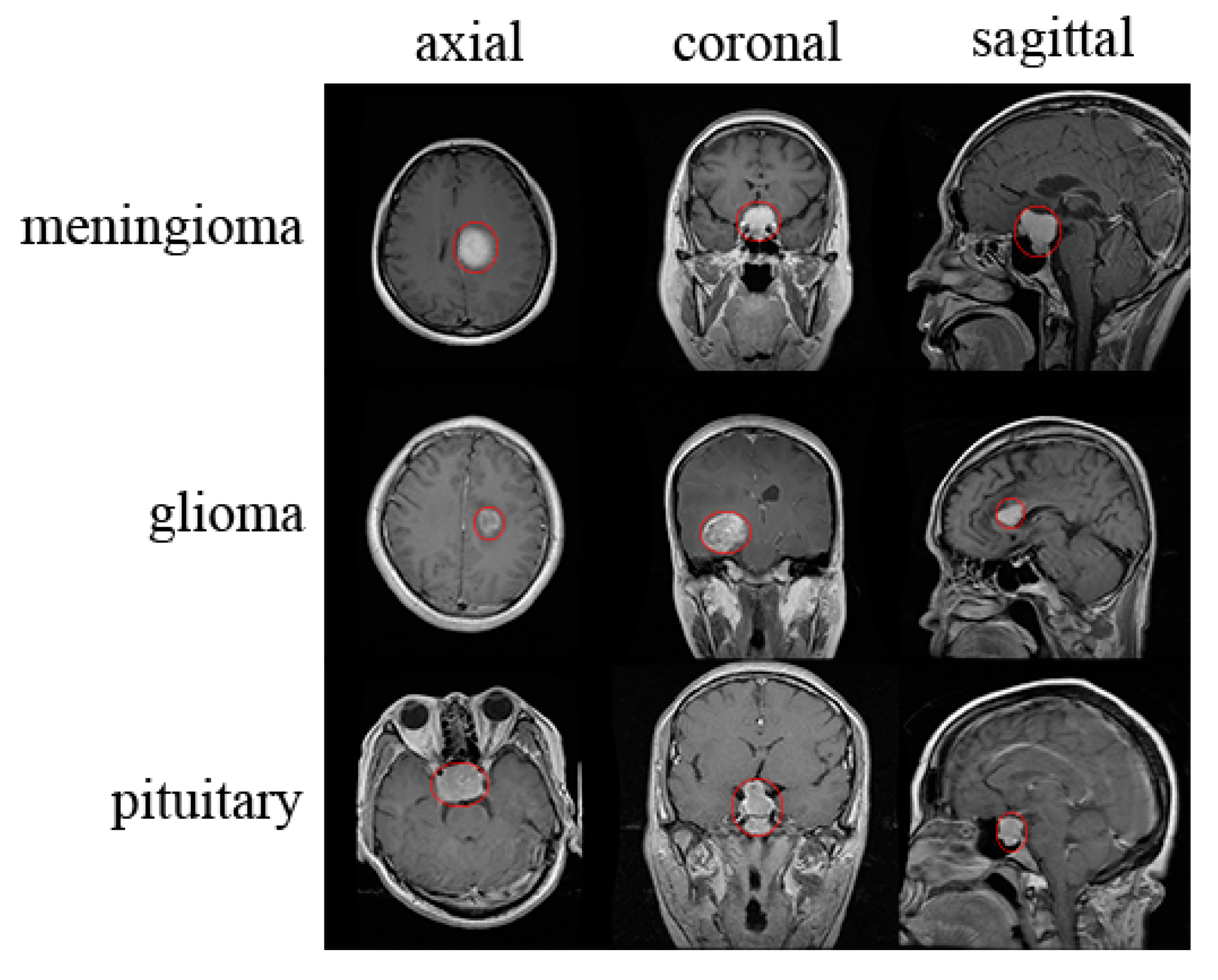
Classification of different brain tumor types using MRI imaging
Symptoms of Brain Cancer
Symptoms depend on tumor size, location, and growth rate. Common signs include:
Important: These symptoms are not exclusive to brain cancer and can be caused by many other conditions. However, new or worsening neurological symptoms warrant prompt medical evaluation.
General Symptoms
- Persistent headaches, worse in the morning or with activity
- Nausea and vomiting, especially without gastrointestinal cause
- Seizures, especially new-onset in adults
- Unexplained fatigue and drowsiness
Neurological Symptoms
- Vision problems like blurriness, double vision, or loss of peripheral vision
- Weakness or numbness in limbs, often on one side
- Balance and coordination problems
- Speech difficulties or understanding language
Cognitive & Behavioral Symptoms
- Personality changes or irritability
- Confusion, memory issues, or difficulty concentrating
- Changes in judgment or decision-making ability
- Gradual loss of movement or sensation
Location-specific symptoms: Frontal lobe tumors may cause behavioral changes; temporal lobe tumors often affect memory; occipital lobe tumors impact vision; cerebellar tumors affect balance and coordination.

Visual representation of common brain tumor symptoms by location
Causes and Risk Factors of Brain Cancer
The exact causes are often unknown, but DNA mutations lead to uncontrolled cell growth. Known risk factors include:
- Age: Most common in older adults (65+); certain types like medulloblastoma more common in children.
- Radiation exposure: From prior cancer treatments or high-dose sources (therapeutic or environmental).
- Inherited syndromes: Like neurofibromatosis, tuberous sclerosis, Li-Fraumeni syndrome, or von Hippel-Lindau disease.
- Family history: Having a first-degree relative with a brain tumor slightly increases risk.
- Compromised immune system: Certain lymphomas more common in immunocompromised individuals.
- Gender: Some types more common in men; meningiomas more common in women.
Note: Secondary brain cancer (metastatic) often spreads from lung, breast, kidney, colon, or skin cancers. These are more common than primary brain tumors.
Debunked Myths
No convincing evidence links brain tumors to:
- Cell phone use (studies show no consistent link)
- Power lines or electromagnetic fields
- Head injuries (except in very rare cases)
- Artificial sweeteners
- Hair dyes or most environmental chemicals
Diagnosis of Brain Cancer
Accurate diagnosis is essential for appropriate treatment planning. The diagnostic process typically involves:
1. Neurological Exam
Testing vision, hearing, balance, coordination, reflexes, and cognitive function to identify affected areas.
2. Imaging Studies
- MRI: Gold standard with contrast for soft tissue detail
- CT Scan: Useful for bone detail and emergency situations
- PET/SPECT: For metabolic activity and distinguishing tumor recurrence from treatment effects
3. Biopsy & Pathology
Tissue sample analysis to determine tumor type, grade, and molecular characteristics for personalized treatment.
4. Advanced Testing
- Genetic/molecular profiling
- Tumor marker analysis
- Lumbar puncture for CSF analysis (for some tumors)

Comparison of normal brain MRI (left) and brain with tumor (right)
Treatment Approaches
Treatment depends on tumor type, location, size, grade, and patient's overall health. Options include:
Surgery
- Craniotomy: Removal of tumor through skull opening
- Awake Brain Surgery: For tumors near critical areas
- Minimally Invasive: Using endoscopic techniques
- Laser Interstitial Thermal Therapy: For hard-to-reach tumors
Radiation Therapy
- External Beam Radiation: Standard approach
- Stereotactic Radiosurgery: Precise, high-dose radiation
- Proton Therapy: Minimizes damage to healthy tissue
- Brachytherapy: Radioactive seeds placed near tumor
Systemic Therapies
- Chemotherapy: Oral or intravenous drugs
- Targeted Therapy: Drugs targeting specific mutations
- Immunotherapy: Boosting immune system against cancer
- Tumor Treating Fields: Electrical fields disrupting cell division
Recent Advances: Personalized medicine based on tumor genetics, immunotherapy combinations, blood-brain barrier disruption techniques, and liquid biopsies for monitoring are transforming brain cancer treatment.
Prevention and Prognosis
Prevention options are limited since most brain tumors have no known preventable cause. Recommendations include:
- Avoid unnecessary radiation exposure when possible
- Genetic counseling for those with family history or inherited syndromes
- Maintain overall health with balanced diet and regular exercise
- Protect head from injury during high-risk activities
Prognosis Factors
Survival varies significantly based on:
| Factor | Better Prognosis | Poorer Prognosis |
|---|---|---|
| Tumor Type | Low-grade, benign tumors | High-grade glioblastoma, metastatic tumors |
| Location | Accessible for complete resection | Critical areas (brainstem, deep structures) |
| Age | Younger patients | Older patients (especially >65) |
| Performance Status | Good general health (KPS >70) | Poor general health, many symptoms |
| Molecular Markers | IDH mutation, MGMT methylation | Wild-type IDH, unmethylated MGMT |
Hope in Research: While glioblastoma has a median survival of 15-18 months with standard treatment, new approaches like immunotherapy combinations, tumor treating fields, and personalized vaccines are extending survival for some patients. Clinical trials offer access to cutting-edge therapies.
Conclusion
Brain cancer remains a challenging diagnosis, but significant advances in understanding, diagnosis, and treatment are offering new hope to patients. Early detection through recognition of symptoms, accurate diagnosis with advanced imaging and molecular testing, and personalized treatment approaches are improving outcomes and quality of life.
Important Reminder: This article provides educational information only and is not a substitute for professional medical advice. If you or someone you know is experiencing symptoms suggestive of a neurological problem, consult a healthcare professional promptly for proper evaluation and diagnosis.
Stay informed with the latest developments in neuro-oncology by following Oncology Insights Hub, your trusted source for evidence-based cancer information, research updates, and patient resources.


Comments
Post a Comment